
Resources
Wireless video link for drones.
Some drone programs start with video as the main requirement, but the link usually ends up carrying more than video alone. CY-2 fits aircraft that need operator video while still leaving room for telemetry, serial payload traffic, and service-side access.
Where this use case fits
Where it fits.
This guide fits aircraft where camera transport is central to the mission, but the operator side also needs telemetry and system awareness. That is common in inspection, observation, payload evaluation, and field-test programs where video is important but not isolated from the rest of the platform.
A practical wireless video link also has to fit the installation. The radio should connect cleanly to cameras, autopilots, payload devices, and embedded systems without forcing separate link hardware for every adjacent data path.
Typical video-link setup
Typical architecture.
Camera-side connection
The vehicle-side unit sits beside the camera path, telemetry sources, and any adjacent payload or compute devices.
Operator-side video access
The ground-side unit connects to the operator display, laptop, or control environment for video and status visibility.
Shared traffic path
Video can travel alongside telemetry, serial data, and selective IP access in one compact air-ground link.
Interfaces that support video workflows
Supported interfaces.
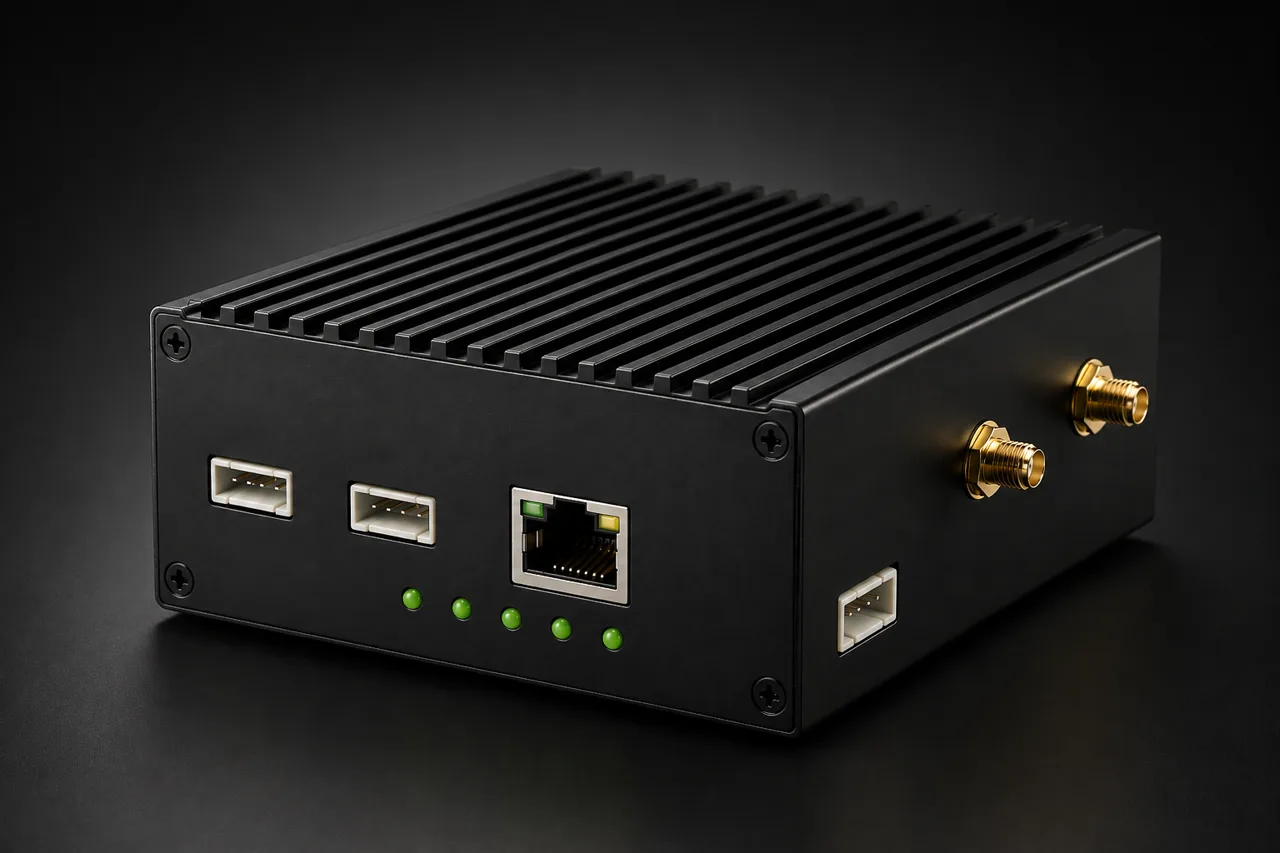
Video-led integrations often still need more than one interface. Ethernet and USB are both useful for camera paths, while UART remains relevant when telemetry or embedded control needs to share the same link.
- Ethernet for IP cameras and onboard compute
- USB for host-side or camera-side video workflows
- UART for telemetry and adjacent control paths
- Web UI for monitoring and setup checks
Integration examples
Integration examples.
Observation drone with operator video and telemetry over one link.
Payload aircraft where camera transport and serial payload control run together.
Field-test platform where video, diagnostics, and operator access all matter during evaluation.
Why CY-2 for drone video workflows
Why CY-2.
CY-2 is useful when the team wants a wireless video link that does not become a dead-end architecture. The same system can keep video central while still carrying the rest of the platform traffic that often shows up later in the program.
- Video transport without isolating the rest of the system
- Works with telemetry and payload-side data in the same link
- Useful for aircraft that already mix camera and embedded interfaces
- Ground-side visibility during setup and deployment
FAQ
Questions buyers ask.
Can CY-2 be used as a wireless video link for drones?
Yes. It can carry camera video between the aircraft and the ground side while also supporting telemetry and other platform traffic.
Does using CY-2 for video mean giving up telemetry support?
No. Video can sit alongside telemetry, serial data, and IP tunnel traffic in the same air-ground system.
Related Resources
Continue exploring.
Start with the main radio-link page
See how CY-2 fits mixed video, telemetry, serial, and IP workflows across platforms.
Read the radio-link guideReview the product features
See specifications, interfaces, deployment model, and monitoring in one place.
Open the features pageRadio link for UAV, UGV, and robotic platforms
Rebhu Radio CY-2 is a radio link for UAV, UGV, and robotic platforms carrying video, telemetry, serial data, and IP tunnel traffic.
Read this resourceDrone data link for video, telemetry, and IP tunnel traffic
Drone data link for moving video, telemetry, UART serial data, and IP tunnel traffic between the aircraft and the ground side.
Read this resourceUAV radio link for video, telemetry, and IP data
UAV radio link for camera video, telemetry, UART payload data, and IP traffic between an air unit and a ground unit.
Read this resourceTalk to Rebhu about your platform
Share your traffic types, interfaces, and operator-side requirements.
Start a technical discussion