Resources
UAV radio link for video, telemetry, and IP data.
A useful UAV link has to carry more than a camera feed. Operators often need video, autopilot telemetry, serial payload access, and some level of IP connectivity between the aircraft and the ground side. CY-2 is built for that broader mix.
Where this use case fits
Where it fits.
This guide fits UAV projects where several onboard subsystems need to share the same air-ground path. That can include camera transport, serial telemetry, payload logic, and access to small onboard services running on embedded compute.
In aircraft work, weight, packaging, and interface simplicity matter. The link has to fit inside a compact installation while still mapping cleanly to Ethernet, UART, and USB-based devices already used across the airframe.
Typical UAV architecture
Typical architecture.
Air unit on aircraft
Connected to onboard cameras, autopilot telemetry, payload controllers, and embedded compute.
Ground unit with operator
Connected to the operator display, laptop, or ground control environment.
UAV traffic mix
Video downlink, telemetry bridge, serial control, and IP access for onboard services.
Interfaces that matter in UAV integration
Supported interfaces.
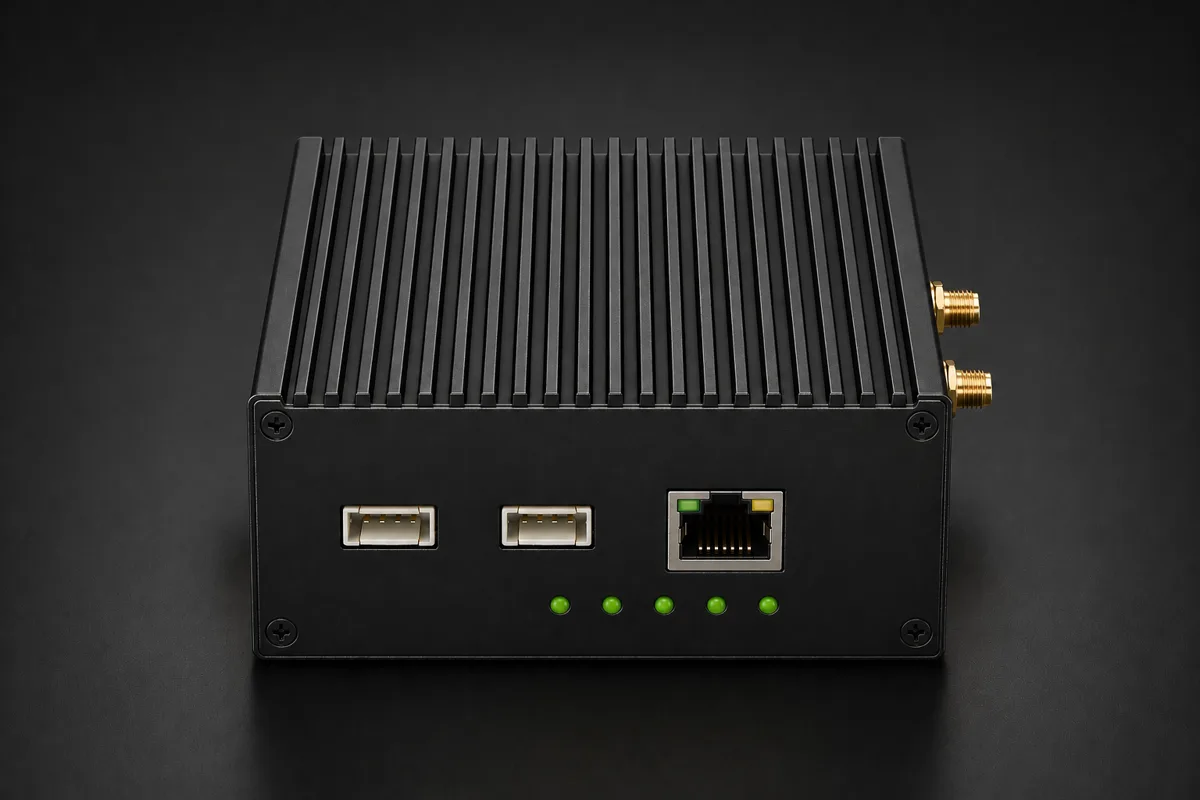
UAV integrations commonly depend on UART for autopilot telemetry, Ethernet for IP cameras or compute modules, and USB in smaller payload or operator-side workflows.
- UART for autopilot and telemetry devices
- Ethernet for IP cameras and compute payloads
- USB for cameras or host integration
- Web UI for local monitoring before deployment
Integration examples
Integration examples.
Small UAV with autopilot telemetry and operator-side status visibility.
Airframe carrying an IP camera and onboard compute that needs ground-side access.
Payload UAV where serial payload devices and camera data travel through one link.
Why CY-2 for a UAV radio link
Why CY-2.
CY-2 fits UAV programs that want one compact link for the traffic the aircraft already carries. That keeps the wiring and integration story cleaner without forcing a separate radio for each function.
- Useful for mixed UAV traffic, not just one video feed
- Works with familiar vehicle interfaces
- Supports air-unit and ground-unit deployment logic
- Ground-side monitoring helps test and commissioning
FAQ
Questions buyers ask.
Can CY-2 carry UAV video and telemetry together?
Yes. It is intended for mixed air-ground traffic including video, telemetry, serial data, and IP tunnel services.
Can it be used with autopilot UART telemetry?
Yes. UART transport is one of the intended workflows for autopilot and serial payload communication.
Related Resources
Continue exploring.
Start with the main radio-link page
See how CY-2 fits mixed video, telemetry, serial, and IP workflows across platforms.
Read the radio-link guideReview the product features
See specifications, interfaces, deployment model, and monitoring in one place.
Open the features pageDrone data link for video, telemetry, and IP tunnel traffic
Drone data link for moving video, telemetry, UART serial data, and IP tunnel traffic between the aircraft and the ground side.
Read this resourceDrone telemetry radio with UART and IP support
Drone telemetry radio with UART support for autopilot communication, plus video and IP tunnel capability in the same air-ground link.
Read this resourceWireless IP tunnel radio for UAVs and UGVs
Wireless IP tunnel radio for UAV, UGV, and robotic platforms that need operator-side access to onboard services and diagnostics.
Read this resourceTalk to Rebhu about your platform
Share your traffic types, interfaces, and operator-side requirements.
Start a technical discussion