
Resources
Ethernet and UART radio link for embedded platforms.
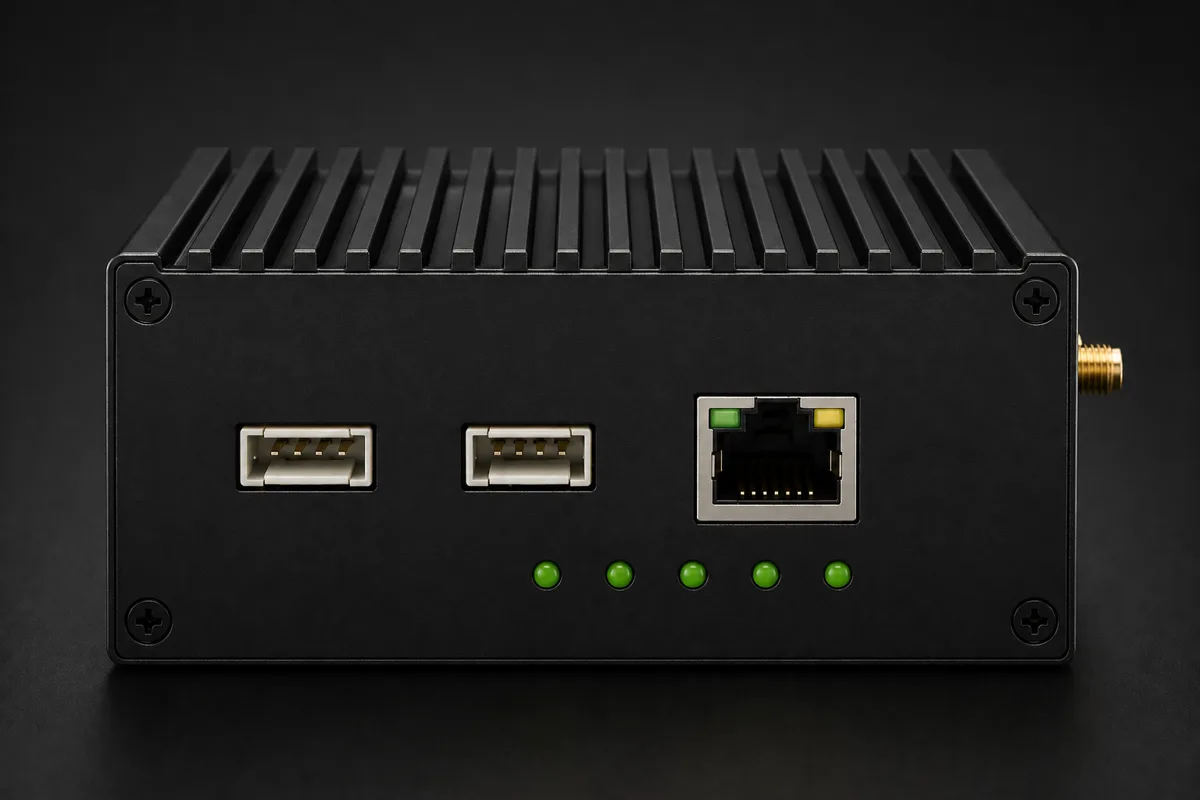
Many embedded mobility platforms need both Ethernet and UART in the same radio architecture. Ethernet is useful for IP payloads, cameras, and compute devices, while UART remains central for autopilot telemetry, serial sensors, and custom payload controllers. CY-2 is built around that interface mix.
Where this use case fits
Where it fits.
This guide fits teams that think in interfaces first. In many embedded platforms, the question is not simply whether a radio can move data, but whether it can fit cleanly into an architecture that already contains Ethernet devices, UART-based controllers, and operator-side access requirements.
That makes this use case especially relevant to platforms carrying onboard compute, IP payloads, autopilot-style telemetry, or custom embedded modules that need a practical air-ground integration model.
Typical mixed-interface setup
Typical architecture.
Ethernet side
IP cameras, compute modules, and network-facing payloads connect over Ethernet.
UART side
Telemetry links, serial sensors, and embedded controllers connect over UART.
Ground-side integration
The operator or engineer accesses both service-facing and telemetry-facing workflows from one ground unit.
Why the interface mix matters
Supported interfaces.
Teams often end up managing Ethernet and UART separately. CY-2 becomes relevant where those paths need to coexist in one radio system rather than being split across separate integration tracks.
- Ethernet for IP devices and compute payloads
- UART for telemetry and serial control
- USB for host-side workflows where needed
- Web UI for radio-side visibility
Integration examples
Integration examples.
Aircraft with IP camera payloads plus autopilot UART telemetry.
UGV with embedded controllers, serial sensors, and ground-side diagnostics.
Robotic platform carrying compute services and UART payload logic together.
Why CY-2 for mixed Ethernet and UART workflows
Why CY-2.
CY-2 fits teams that want a cleaner boundary between platform-side devices and operator-side access. That is especially useful when the embedded system already mixes serial and network-facing components and the team wants one radio system to handle both.
- Built around real embedded interface mixes
- Useful for both telemetry and IP device access
- Reduces the need for multiple narrow radio paths
- Supports compact platform packaging
FAQ
Questions buyers ask.
Can CY-2 support Ethernet and UART at the same time?
Yes. That mixed-interface use case is one of the clearest reasons to evaluate the system.
Is this relevant only to drones?
No. It is also relevant to UGVs, robots, and other embedded mobility platforms with both serial and IP devices.
Related Resources
Continue exploring.
Start with the main radio-link page
See how CY-2 fits mixed video, telemetry, serial, and IP workflows across platforms.
Read the radio-link guideReview the product features
See specifications, interfaces, deployment model, and monitoring in one place.
Open the features pageDrone telemetry radio with UART and IP support
Drone telemetry radio with UART support for autopilot communication, plus video and IP tunnel capability in the same air-ground link.
Read this resourceWireless IP tunnel radio for UAVs and UGVs
Wireless IP tunnel radio for UAV, UGV, and robotic platforms that need operator-side access to onboard services and diagnostics.
Read this resourceUGV radio link for robots, rovers, and ground vehicles
UGV radio link for robot and rover platforms carrying telemetry, serial payload data, video, and IP tunnel traffic.
Read this resourceTalk to Rebhu about your platform
Share your traffic types, interfaces, and operator-side requirements.
Start a technical discussion